Contact us
Send Us Your Case Details
We’ll respond and let you know the best way to proceed with your case.

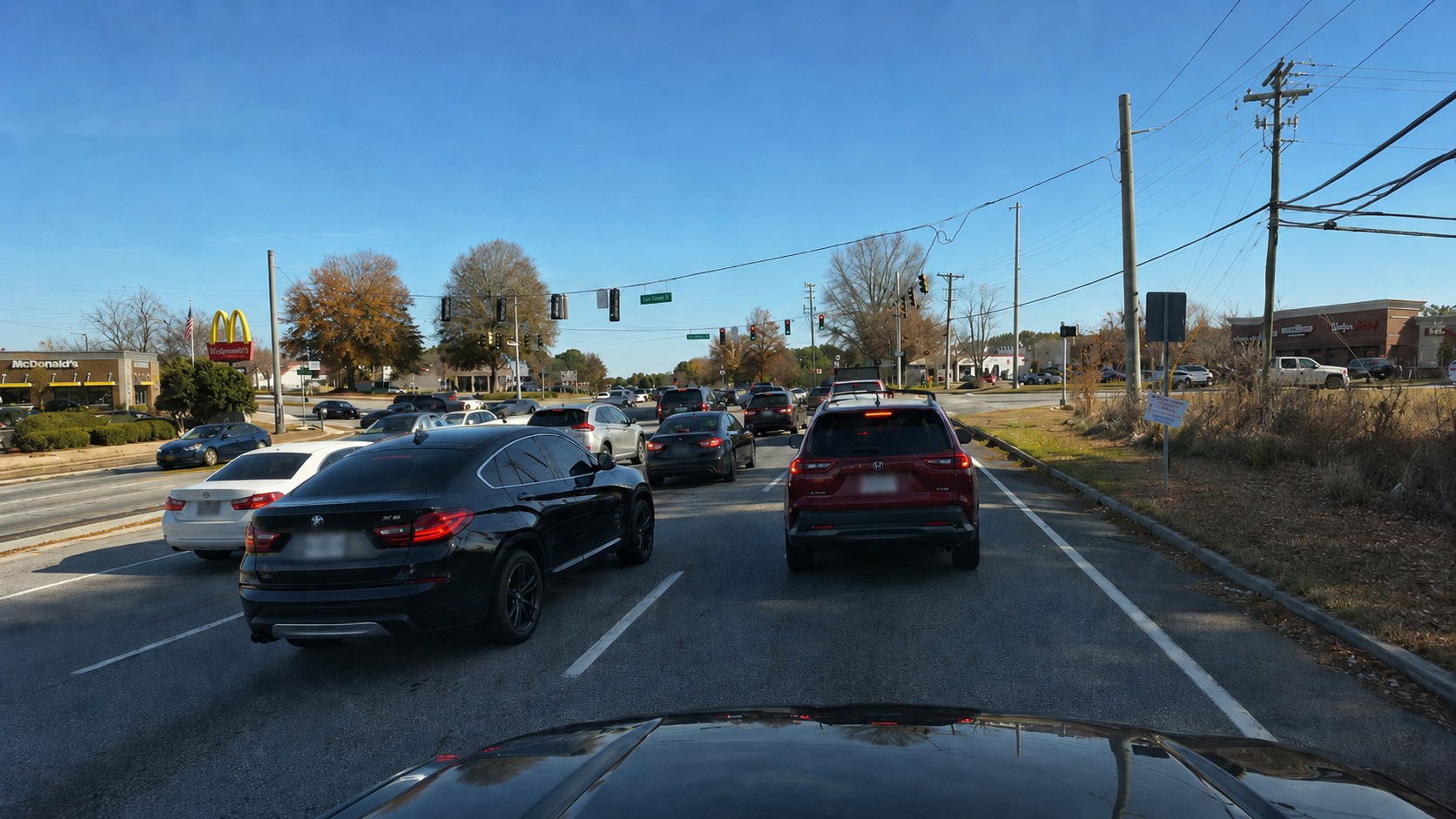
If you live or commute anywhere in Gwinnett County, you already know Sugarloaf Parkway. You probably also know that getting from one end of it to the other without seeing brake lights, emergency flashers, or the aftermath of a collision is becoming increasingly rare.
Stretching roughly 18 miles from Peachtree Industrial Boulevard in Duluth to Highway 316 in Dacula, Sugarloaf Parkway cuts a wide arc across the heart of one of Georgia’s fastest-growing counties. It was originally designed as an alternative route to help ease congestion on surrounding roads like I-85, Highway 316, and Lawrenceville Highway. But as Gwinnett County’s population has surpassed one million residents and continues to climb, the parkway itself has become one of the most congested and crash-prone corridors in the region.
For the people who drive Sugarloaf Parkway every day, none of this is news. What many drivers may not realize, however, is how the specific design of the road, the intersections it connects, and the legal landscape of Georgia personal injury law all come together to shape what happens after one of these crashes occurs.
To understand why this road sees so many accidents, you need to understand what it actually is and what it’s trying to do. Sugarloaf Parkway isn’t just one type of road. It’s a hybrid. Parts of it function as a limited-access freeway with 55 mph speed limits, grade-separated interchanges, and grassed medians. Other sections drop you into congested surface-street conditions with traffic signals, left turn lanes, commercial driveways, and pedestrian crossings. A driver can go from highway-speed travel to a dead stop at a red light in a matter of seconds.
That transition is where the danger lives. Drivers maintaining speeds of 45 to 55 mph on the free-flowing stretches often approach these signalized intersections faster than conditions allow, particularly during rush hour when traffic stacks up quickly. The result is a predictable pattern of rear-end collisions, red-light-running crashes, and high-speed T-bone impacts at major intersections.
Gwinnett County’s explosive growth is the underlying force multiplying these risks. The county added roughly 12,300 residents between 2023 and 2024 alone, and population growth has been positive for more than two decades straight. Every new residential development, shopping center, and commercial corridor along Sugarloaf Parkway adds more vehicles to a road that was designed for a much smaller population. Infrastructure improvements, while underway, have not kept pace with the volume of traffic now using the road every day.
Not all stretches of Sugarloaf Parkway are equally dangerous. Certain intersections have developed well-documented track records for serious and fatal crashes. If you drive this road regularly, these are the areas where you should be especially alert.
Sugarloaf Parkway and Lawrenceville Highway (US 29): This may be the single most dangerous intersection along the entire corridor. Combined with the nearby Lawrenceville-Suwanee Road intersection, located only about 1,000 feet away, this stretch has been identified by local safety analysts as having some of the highest accident totals in Gwinnett County. High speeds on Sugarloaf meeting heavy cross-traffic on US 29 create a volatile combination. A fatal crash here in June 2023 killed one person and injured two others, shutting down the intersection for hours. In early 2026, Gwinnett County commissioners approved a $2.26 million improvement project to add dual left turn lanes and lengthen the southbound right turn lane at this intersection, a direct acknowledgment that the current configuration is failing drivers.
Sugarloaf Parkway and Scenic Highway: This intersection handles heavy commuter traffic during both morning and evening rush hours. The crash pattern here is driven by a speed differential problem. Cars on Scenic Highway tend to be stopping and starting in congested conditions while vehicles on Sugarloaf Parkway are carrying significantly higher speeds. When those two patterns meet at a signalized intersection, angle collisions and failure-to-yield crashes are common.
Sugarloaf Parkway and McGinnis Ferry Road: This intersection connects major residential neighborhoods, retail areas, and school traffic zones, which means it handles a high volume of turning movements throughout the day. The crash pattern here tends toward T-bone collisions and red-light-running incidents that can produce serious head, shoulder, and spinal injuries due to the side-impact forces involved.
Sugarloaf Parkway and SR 316 interchange area: The interchange where Sugarloaf meets Highway 316 near Gwinnett Technical College is a high-speed merge zone. In January 2025, a major crash near this interchange required multiple emergency responders. The speed and volume of traffic in this area, combined with drivers attempting to navigate unfamiliar ramp configurations, make this a persistent trouble spot.
Sugarloaf Parkway near Cruise Road and Highway 316 overpass: The turn lanes in this area have been described as confusing for drivers turning onto Cruise Road as well as those merging with Highway 316 traffic. Confusion about lane assignments at speed is a recipe for sideswipe and merge-related crashes.
Sugarloaf Parkway near North Brown Road and Breckinridge Boulevard: In March 2026, an illegal street race in this area ended with a 28-year-old driver killed after a vehicle left the road and struck a tree. An 18-year-old was later charged with homicide by vehicle. While street racing is an extreme example, this crash highlights the dangers of high speeds in an area where Sugarloaf Parkway’s wide lanes and long sight lines can tempt drivers into reckless behavior.
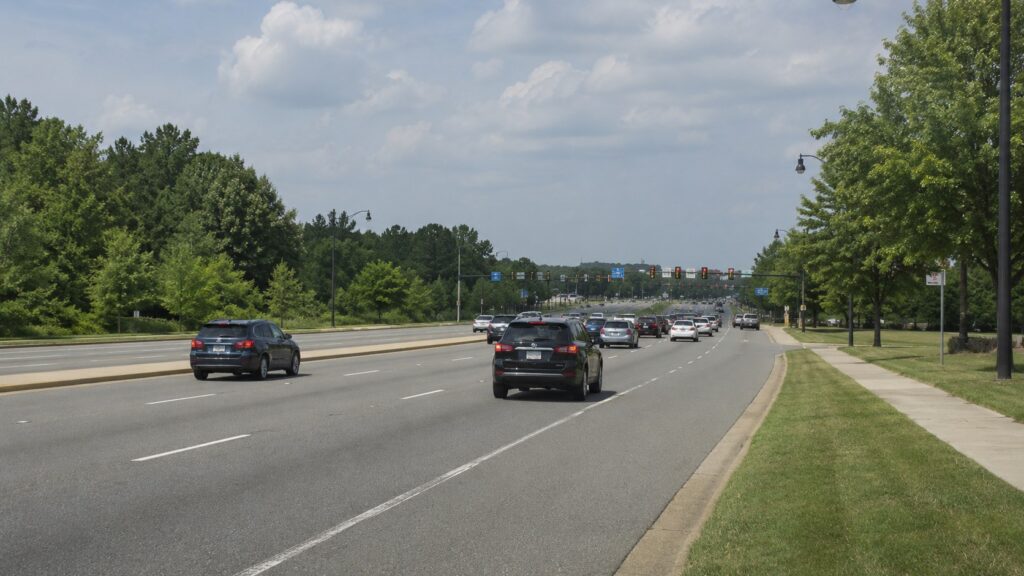
The mix of road designs along Sugarloaf Parkway produces a few recurring crash types that account for most of the serious injuries and fatalities.
Rear-end collisions are extremely common, particularly in areas where traffic transitions from free-flowing to congested. A driver cruising at 50 mph who suddenly encounters stopped traffic at an intersection may have only seconds to react. At that speed, even hard braking may not be enough.
T-bone and angle crashes at intersections are among the most dangerous. When one vehicle runs a red light or fails to yield on a left turn and strikes the side of another vehicle, the impact often hits directly at the driver or passenger door, where there is far less structural protection than in a front or rear impact. These crashes frequently result in traumatic brain injuries, spinal cord damage, and broken bones.
Left-turn crashes deserve special attention on this road. The fatal crash near Villa Ridge Parkway in October 2024, where a 16-year-old driver failed to yield while turning left from Sugarloaf Parkway and killed another motorist, is a tragic example of how a single misjudgment at a left turn can be deadly. The county’s decision to invest millions in adding dual left turn lanes at the Lawrenceville Highway intersection reflects just how dangerous these turning movements have become.
Single-vehicle crashes, including run-off-road incidents, are also a factor, particularly on the higher-speed limited-access sections where a moment of distraction or overcorrection can send a vehicle into a guardrail, median, or tree line.
If you’ve been hurt in an accident on Sugarloaf Parkway, the legal framework that governs your claim has some important features you should understand.
Georgia follows a modified comparative negligence system under O.C.G.A. § 51-12-33. What this means in practical terms is that you can recover compensation for your injuries as long as you are less than 50 percent at fault for the accident. If a jury determines you were 50 percent or more responsible, you recover nothing. And if you were partially at fault but below that threshold, your total compensation is reduced by your percentage of responsibility.
This rule matters on a road like Sugarloaf Parkway because insurance companies regularly try to shift blame to injured drivers. Following too closely, failing to adjust speed for traffic conditions, or being momentarily distracted can all be used to argue that you share fault for the crash. Even when another driver clearly caused the accident, the insurance adjuster’s job is to push your fault percentage as high as possible, because every percentage point of fault assigned to you is money they don’t have to pay.
Georgia’s statute of limitations for personal injury cases gives you two years from the date of the accident to file a lawsuit. That may sound like plenty of time, but building a strong claim on a busy road like Sugarloaf Parkway requires prompt action. Traffic camera footage from Gwinnett County DOT cameras may be overwritten. Witnesses move away or forget details. Physical evidence at the scene gets cleaned up. The sooner you or your attorney begin preserving evidence, the stronger your position will be.
The steps you take immediately after an accident can have a major impact on your ability to recover fair compensation down the road.
First, call 911 and make sure a police report is filed. Gwinnett County police and the accident investigation unit handle crashes on Sugarloaf Parkway regularly, and the official report becomes a foundational document in your claim.
Second, get medical attention, even if you feel fine at the scene. The adrenaline of a collision can mask symptoms of serious injuries, including concussions, soft tissue damage, and internal bleeding, that may not become apparent for hours or even days. A gap between the accident and your first medical visit gives the insurance company ammunition to argue your injuries weren’t caused by the crash.
Third, document everything you can. Take photos of the vehicles, the intersection, traffic signals, skid marks, and any visible injuries. If there are witnesses, get their contact information. Note the time of day, weather conditions, and traffic levels.
Fourth, be very careful about what you say to the other driver’s insurance company. Insurance adjusters are trained to ask questions that elicit statements they can use to reduce or deny your claim. You are not required to give a recorded statement, and doing so without legal guidance can be a costly mistake.
Finally, talk to a personal injury attorney who understands the specific dynamics of Gwinnett County roads. An attorney can help preserve critical evidence like traffic camera footage, identify whether road design or maintenance failures contributed to your crash, and negotiate with insurance companies who are incentivized to minimize what they pay you.
Gwinnett County is investing in Sugarloaf Parkway. The intersection improvements at Lawrenceville Highway, the planned widening study from Old Norcross Road to Scenic Highway, and the longer-term Sugarloaf Parkway Extension project all signal that officials recognize this corridor needs attention. The county has even deployed new adaptive traffic management technology on key intersections, activated in May 2025, aiming to improve signal timing and reduce congestion-related crashes.
But infrastructure projects take years. In the meantime, more than a million Gwinnett County residents and commuters continue to rely on this road every day. Until the road catches up with the population, Sugarloaf Parkway will remain one of the most dangerous stretches of road in the county.
If you’ve been injured in a crash on Sugarloaf Parkway or any Gwinnett County road, don’t navigate the process alone. Contact our office for a free consultation to discuss your case and understand your options.